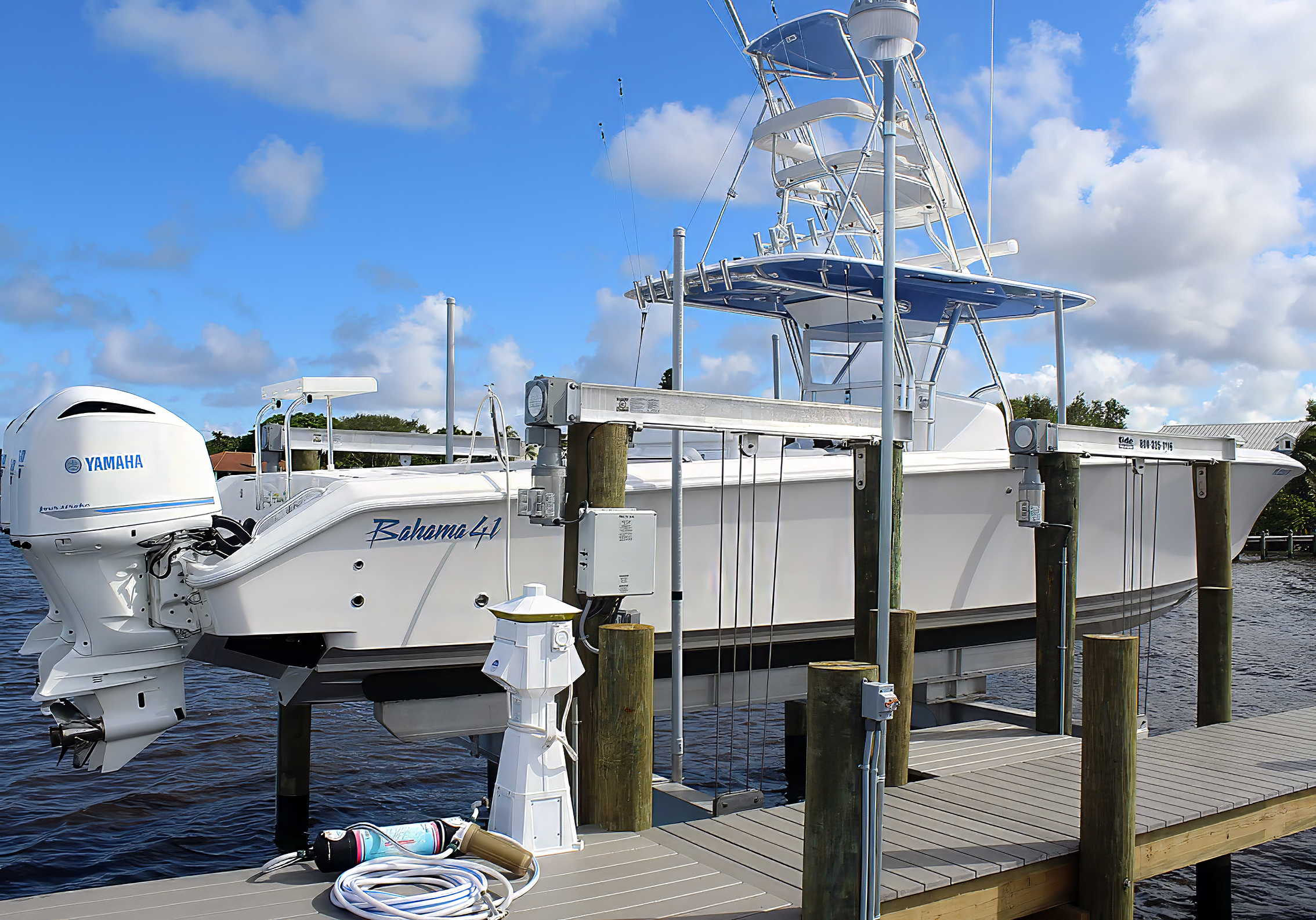
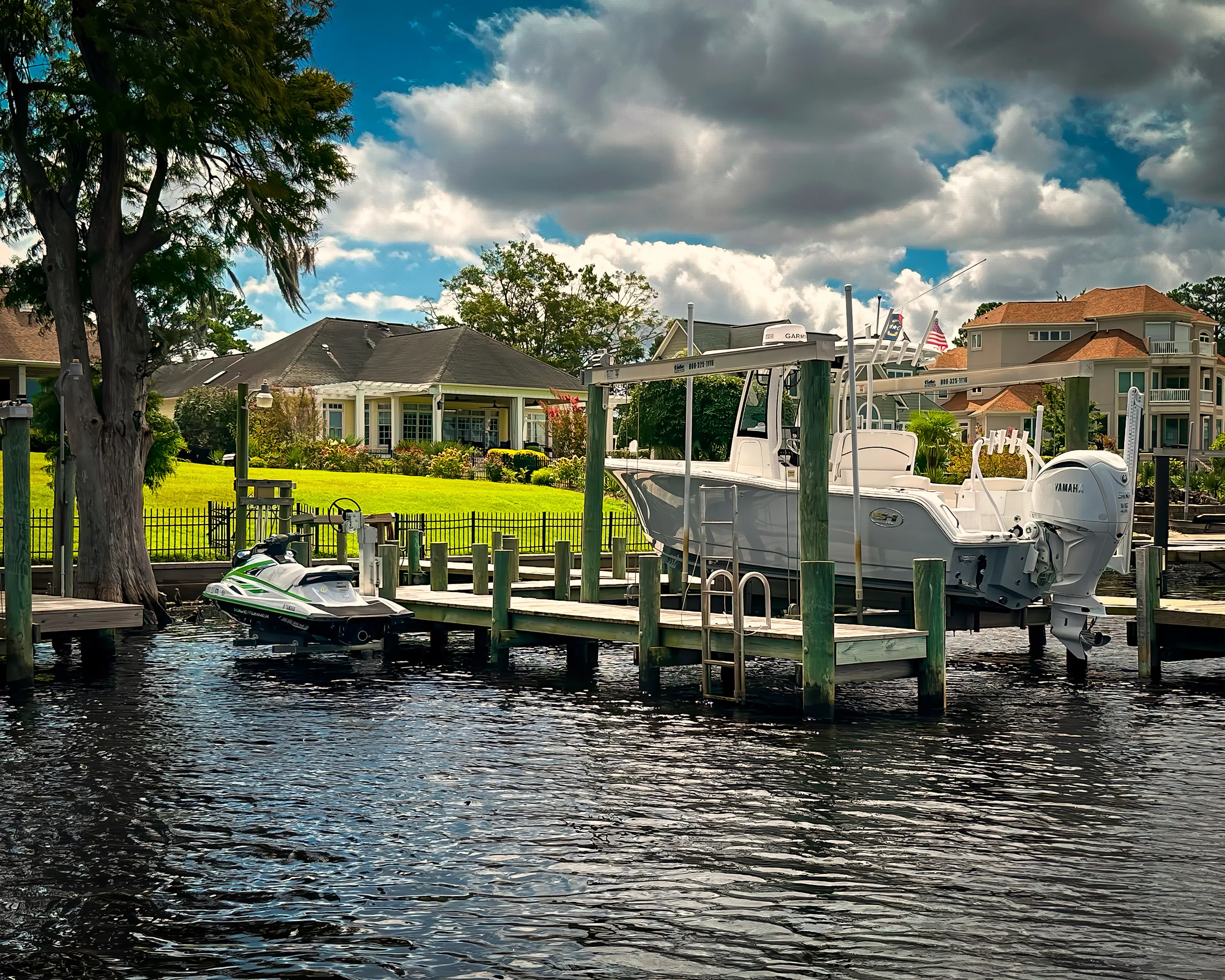
Yacht Lifts Built for Large Vessels & Maximum Performance
Larger boats bring greater demands — not just in total weight, but in balance, hull support, structural reinforcement, and lifting precision.
Standard lift systems are not designed for those conditions. A yacht lift must be engineered around the full vessel and waterfront environment, including loaded weight, center of gravity, piling size, cable routing, cradle layout, water depth, and tidal movement.
Tide Tamer yacht lifts are designed for high-capacity performance, helping protect large vessels while making waterfront access more dependable and convenient.
When your boat represents a serious investment, the lift beneath it needs to be built with the same level of care.
Quick Overview
Best for: Large vessels, yacht-class boats, and high-capacity waterfront applications
Capacity range: 50,000 to 120,000 lbs, depending on configuration
Dock compatibility: High-capacity piling-supported structures
Water conditions: Coastal, tidal, saltwater, and high-load environments
System goal: Maximum lifting strength, stability, and long-term vessel protection
Configuration: Custom lift design based on vessel weight, hull type, piling layout, and site conditions
How Yacht Lifts Work
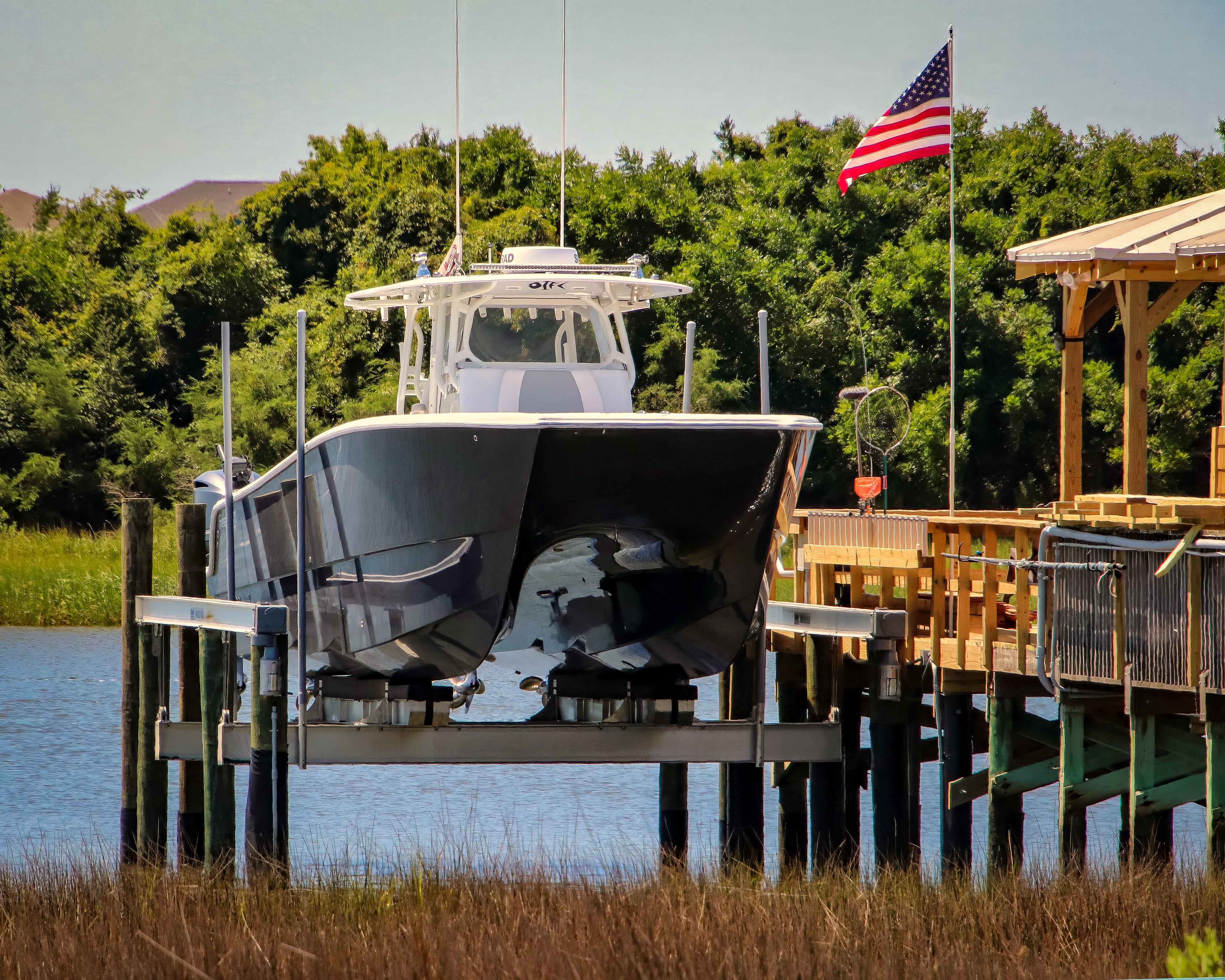
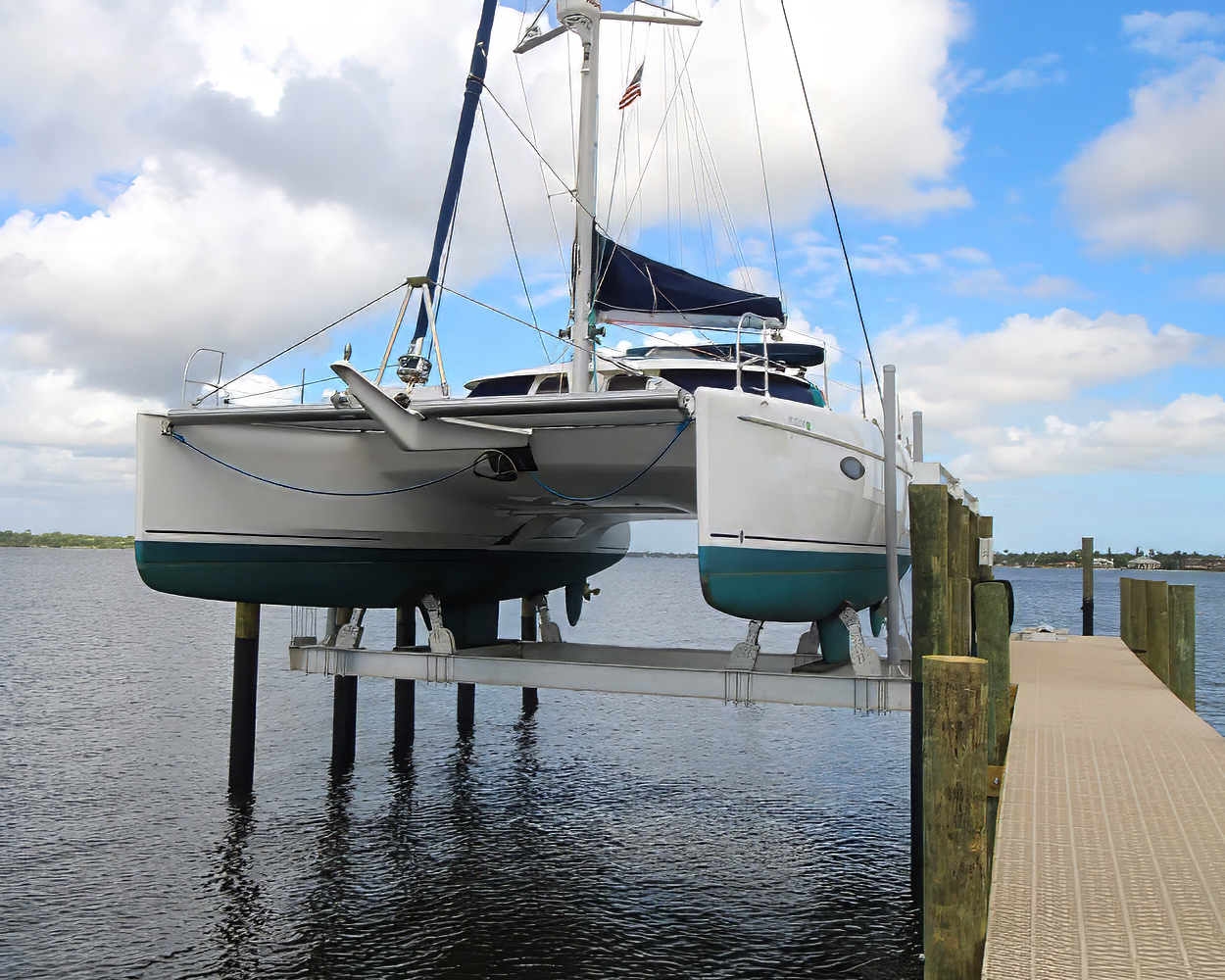
Yacht lifts use a cable-driven cradle system supported by multiple pilings to raise and lower large vessels.
The system distributes weight across reinforced top beams, cradle beams, bunks, cable assemblies, motors, and piling supports. This helps keep the vessel stable, properly supported, and securely positioned above the waterline when not in use.
Because large vessels place greater demands on every part of the lift, yacht lift systems require careful planning. Proper load distribution, center of gravity placement, piling layout, cable configuration, and motor sizing are all critical to long-term performance.
Tide Tamer’s owner guidance also emphasizes that boat weight must be evenly distributed across the lifting structure and that the vessel’s center of gravity should be properly positioned between the cradle beams.
KEY FEATURES
High-Capacity Structural Design
Built to support large vessels with reinforced structural components and lift configurations designed around stability.
Advanced Cable Configurations
Uses unique cable configurations designed for high-capacity lifting applications, helping provide the strength and control larger vessels require.
Multi-Motor Configurations
High-capacity yacht lift systems may use multi-motor configurations depending on lift capacity and project requirements.
Heavy-Duty I-Beam Bunks
Aluminum I-beam bunks provide strong vessel support and help distribute load across the cradle system.
Aluminum & Stainless Steel Construction
Coastal-ready materials help deliver strength, corrosion resistance, and long-term durability in saltwater environments.
Direct-Drive Gear Units
Designed for dependable lifting performance without unnecessary mechanical complexity.
Grooved Cable Winders
Support controlled cable movement and consistent lifting operation.
Fully Adjustable Components
Weighted guide poles, piling straps, and cradle components help tailor the system to the vessel and site conditions.
10-Year Limited Warranty
Warranty-backed protection provides added confidence for long-term ownership.
WHAT SETS THIS DESIGN APART
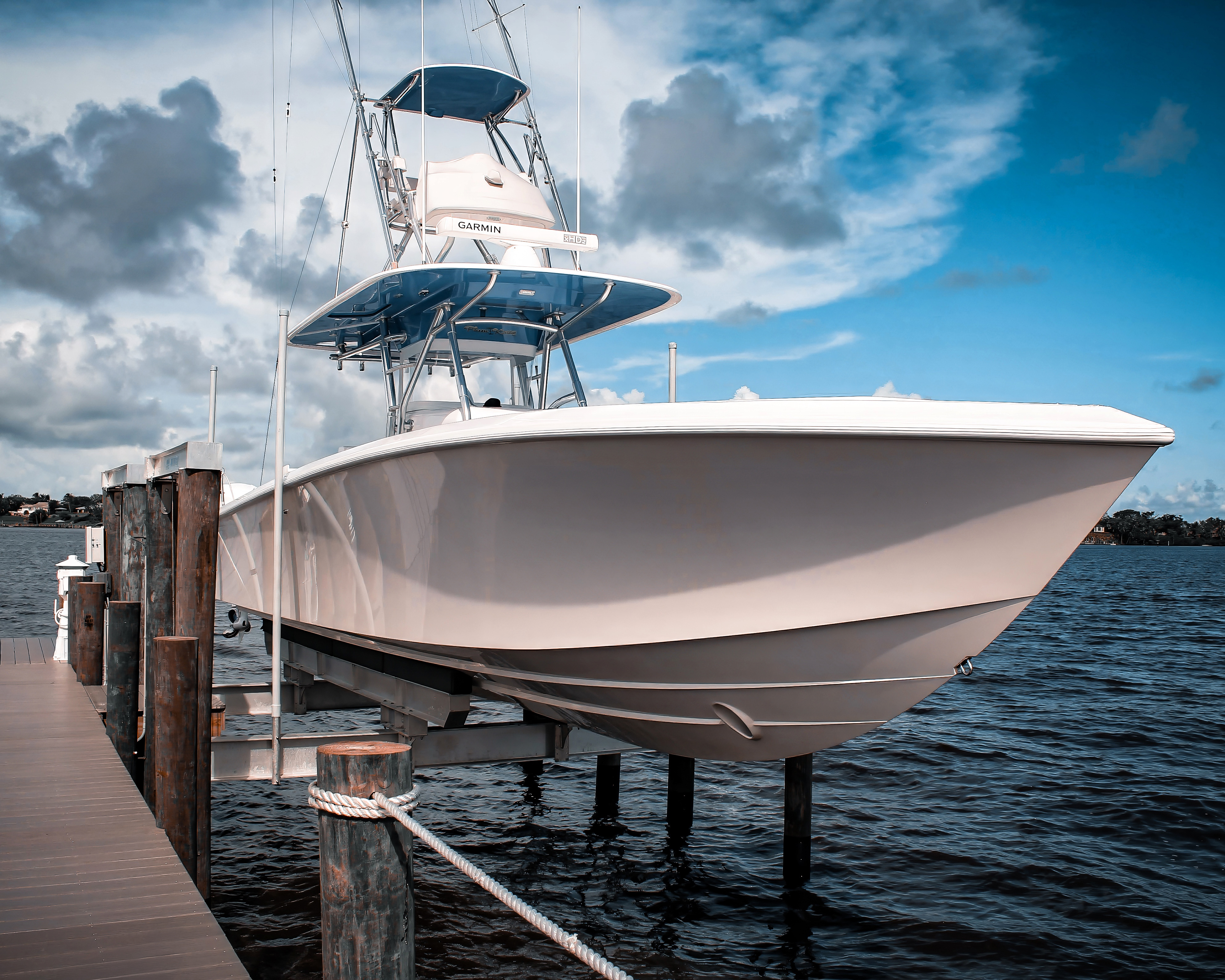
Yacht lifts are engineered for performance at a different scale.
With larger vessels, the question is not simply, “Can the lift hold the weight?” The better question is, “Can the system support the vessel properly over time?”
That requires the right combination of structural design, lifting capacity, cable routing, motor power, piling support, and vessel-specific configuration.
Tide Tamer yacht lifts are built to provide the strength and stability large boats require while maintaining smooth, controlled lifting operation in demanding coastal conditions.
Technical Specifications
Yacht Lift Technical Specifications
Yacht lifts are engineered for larger vessels and higher loads, using reinforced structural components, multi-motor drive systems, heavy-duty cradle beams, and advanced cable routing to support demanding waterfront applications.
Scroll sideways to view all specifications.
| Capacity | Top Beam | Cradle Beam | Bunks | Cable Size / Pull | Drive | Motor | Drive Shaft | Minimum Piling |
|---|---|---|---|---|---|---|---|---|
| 50,000 lb. | 9 in. channel x 94 in. | Dual 7 in. x 12 in. x 18 ft. | 16 ft. I-beam bunks | 7/16 in. SS 7/19 6-part cable configuration | Direct drive | 2 H.P. Qty. 4 220V, 9.0A each | 1-1/2 in. Sch. 80 | 12 in. Qty. 8 |
Helpful context: The 50,000 lb. yacht lift uses an 8-piling layout, four motors, dual cradle beams, I-beam bunks, and a 6-part cable configuration for larger-vessel support.
Engineering note: Load should always be evenly distributed across the lifting beams, with the boat’s center of gravity positioned properly. A local Tide Tamer dealer can help confirm the right lift capacity, piling requirements, and setup for the vessel and waterfront conditions.
RESOURCES
Why Choose a Tide Tamer Yacht Lift?
When vessel size increases, precision and structural support become critical.
A properly matched yacht lift can help:
Support significantly higher vessel weights
Improve stability during lifting and storage
Keep the boat safely raised above the waterline
Reduce stress on individual structural components
Support proper weight distribution across the lift system
Improve access, maintenance, and long-term vessel care
Provide confidence in coastal, tidal, and saltwater conditions
For large boats and high-value waterfront properties, the right lift is not just equipment. It is protection for your vessel, your dock, and your peace of mind.
Planning a New Dock or Yacht Lift Installation?
High-capacity yacht lift planning should begin before piling placement and dock construction are finalized. Coordinating the lift early allows vessel clearance, structural requirements, piling layout, electrical service, cable routing, and future maintenance access to be considered as part of the overall waterfront design.
Have Your Vessel Information Ready
Your Tide Tamer dealer or marine contractor may need the vessel’s fully loaded weight, overall dimensions, hull configuration, and center-of-gravity information when available. Site measurements, piling plans, electrical-service details, and dock drawings may also be needed to determine the appropriate lift configuration.
IS THIS THE RIGHT LIFT FOR YOU?
Yacht lifts are built for specific applications: large vessels, heavier loads, and high-capacity waterfront structures.
Ideal if you:
Own a yacht or large vessel
Require a high-capacity lift system
Need more capacity than a standard four-piling or eight-piling lift
Want maximum structural stability
Need a lift designed around vessel weight and center of gravity
Use your boat in coastal or tidal environments
Want long-term protection for a high-value vessel
A Yacht Lift May Not Be the Best Fit If You:
Have a mid-size or smaller boat
A four-piling or standard eight-piling lift meets your needs
Your dock is not designed for high-capacity lifting
Your piling layout cannot support the required configuration
You need a lower-profile or access-focused system instead