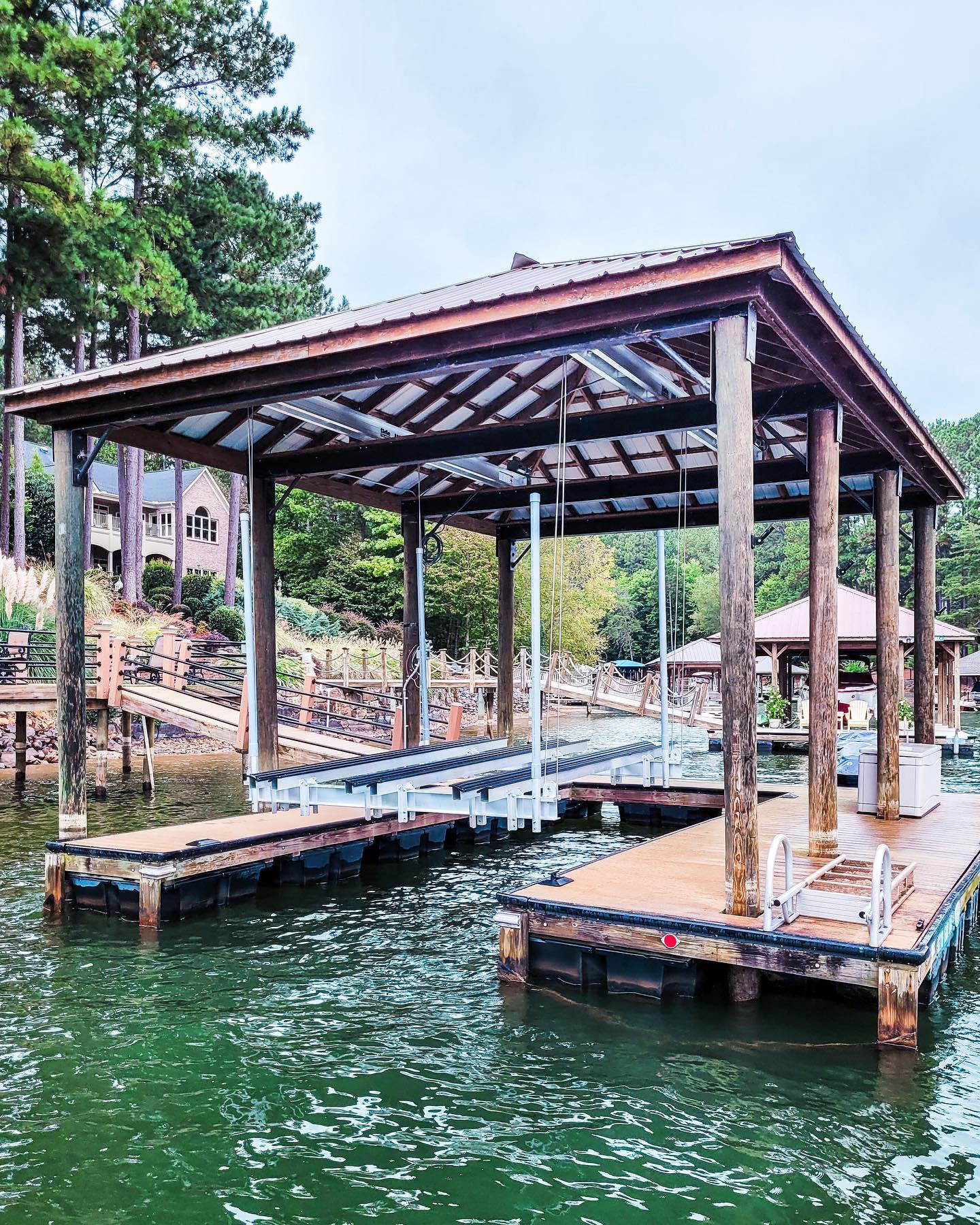
Overhead Boat Lift Systems for Covered Dock Protection
A boathouse helps shield your boat from sun, weather, and debris. A boat house lift completes the protection by keeping your hull, running gear, and lower surfaces out of the water between uses.
Built with aluminum and stainless steel construction, direct-drive gear units, stainless steel motors, cable-driven lifting systems, and overhead mounting components, Tide Tamer boat house lifts are engineered for dependable coastal performance.
Quick Overview
Best for: Boats stored inside covered boathouse structures
Capacity range: Common configurations from 7,000 to 12,000 lbs
System type: Overhead beam and cable-driven cradle lift
Water conditions: Coastal, tidal, and saltwater environments
Primary benefit: Keeps your boat lifted, protected, and out of the water
Best fit: Waterfront owners focused on long-term boat protection and cleaner storage
Boat House Lifts Built for Strength, Safety, and Durability
A boathouse protects your boat from sun, rain, wind, and debris — but if the boat stays in the water, you are still dealing with marine growth, corrosion, hull staining, and long-term performance loss.
A Tide Tamer boat house lift solves that problem by raising your boat above the waterline inside the structure.
That means less time fighting algae and barnacles, less exposure below the waterline, and more confidence that your boat is protected between trips.
For waterfront owners who care about both convenience and long-term vessel care, a boat house lift is one of the most practical upgrades you can make.
How Boat House Lifts Work
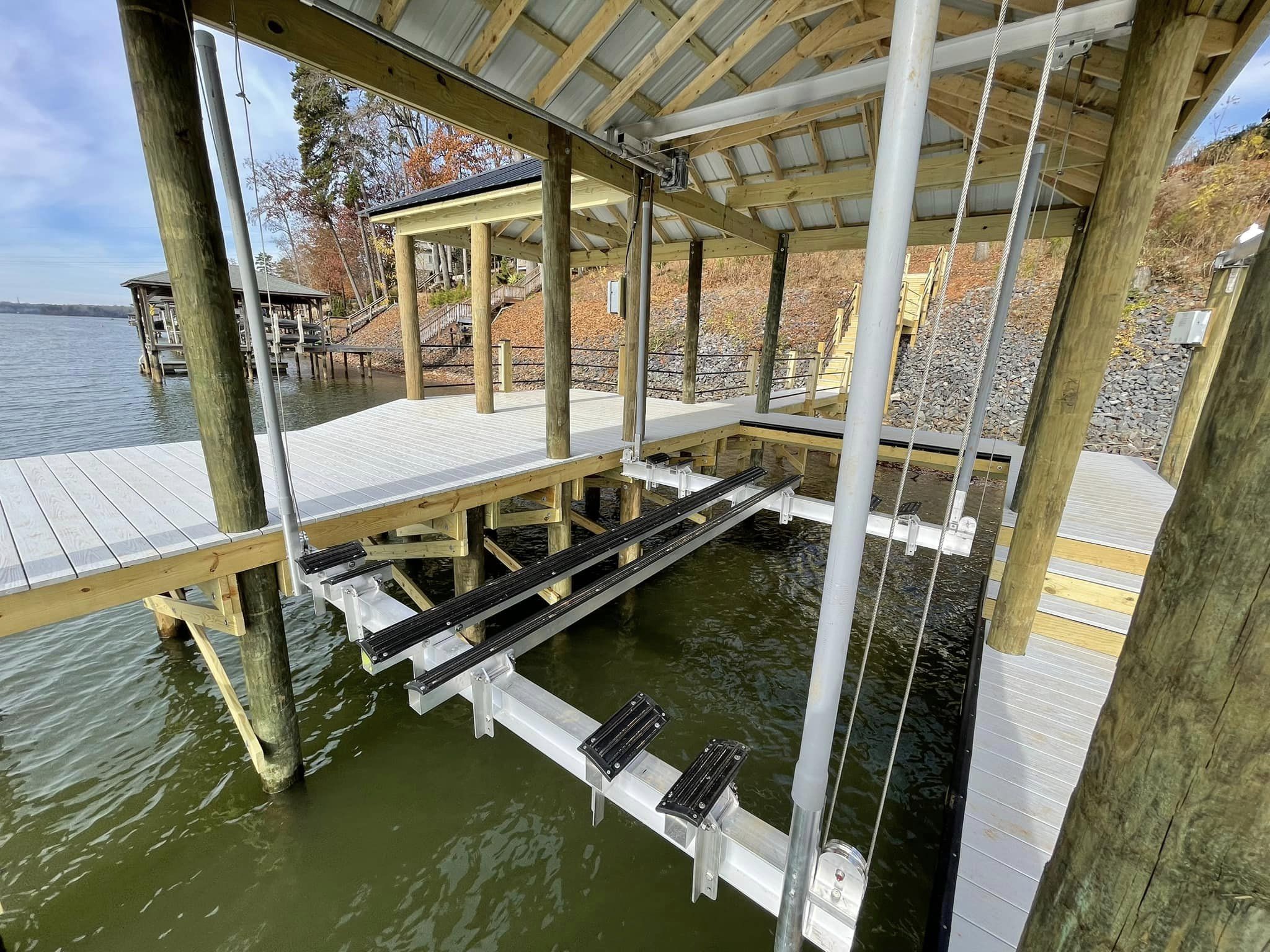
Boat house lifts use an overhead beam and cable system to raise and lower your boat within a covered dock or boathouse structure.
The lift routes cable through pulleys and cradle assemblies, allowing the boat to be lifted vertically and stored safely above the waterline. The cradle system helps distribute the boat’s weight evenly so the vessel is properly supported while stored.
Unlike piling-mounted lifts installed outside the structure, boat house lifts are designed to work within the boathouse itself — using overhead support, cable routing, and cradle components to lift the boat in place.
A properly matched system depends on your boat weight, boathouse structure, water depth, cable routing, cradle setup, and installation requirements.
KEY FEATURES
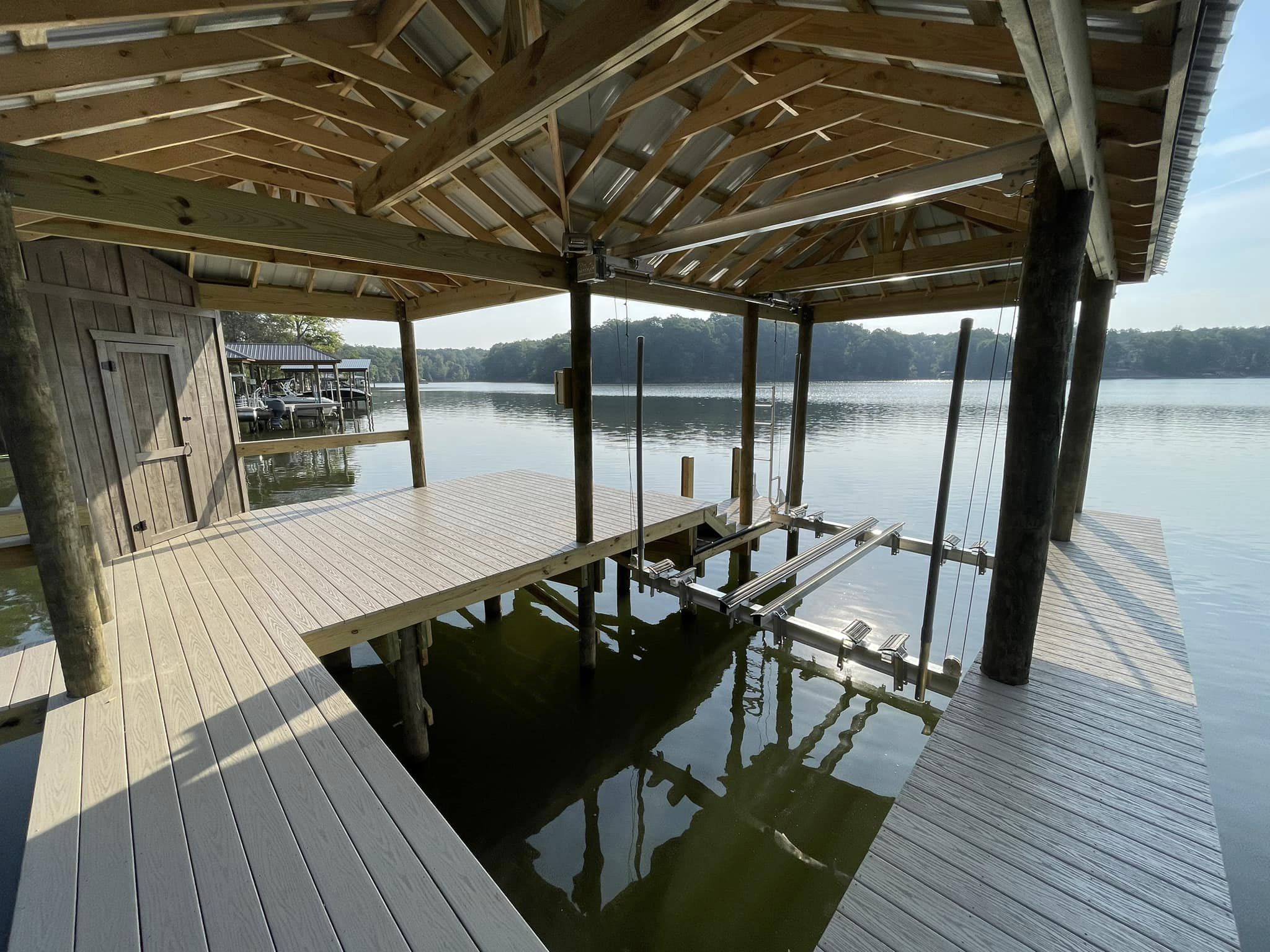
Overhead Beam & Cable System Designed specifically for boathouse installations, allowing the boat to lift vertically inside the structure. | Stainless Steel Motors Built for repeated use in coastal and marine environments. |
Cable-Driven Cradle Lift Raises and lowers the boat using a cradle system that supports stable lifting and proper boat positioning. | Aluminum & Stainless Steel Construction Designed for coastal use where saltwater, humidity, and daily exposure are part of life. |
Direct-Drive Gear Units Delivers dependable lifting performance with a simple, proven drive system. | Rotary Limit Switch Options Helps control lift travel and stopping points for more consistent operation. |
Aluminum Cradle with Bunks Supports the hull while helping keep the boat properly positioned during storage. | Guide Pipes and Pulley Assemblies Help guide the lifting system and support smooth cable movement. |
WHAT SETS THIS DESIGN APART
Boat house lifts are engineered differently from standard dock lifts.
Instead of mounting to pilings or beams at dock level, these systems operate within the structure using overhead beams, cable routing, and cradle systems. This allows the lift to raise your boat completely out of the water while keeping it protected inside your boathouse.
This combination of structure + lift system is what makes boat house lifts especially effective for long-term storage and protection.
WHY CHOOSE A BOAT HOUSE LIFT
A boat house lift does more than raise your boat—it helps protect your investment over time.
Benefits of Using a Boat House Lift
Keeps your boat out of the water when not in use
Reduces buildup of algae, barnacles, and debris
Helps maintain performance and fuel efficiency
Preserves the appearance of your hull
Extends the life of your boat
Technical Specifications
Boathouse Lift Technical Specifications
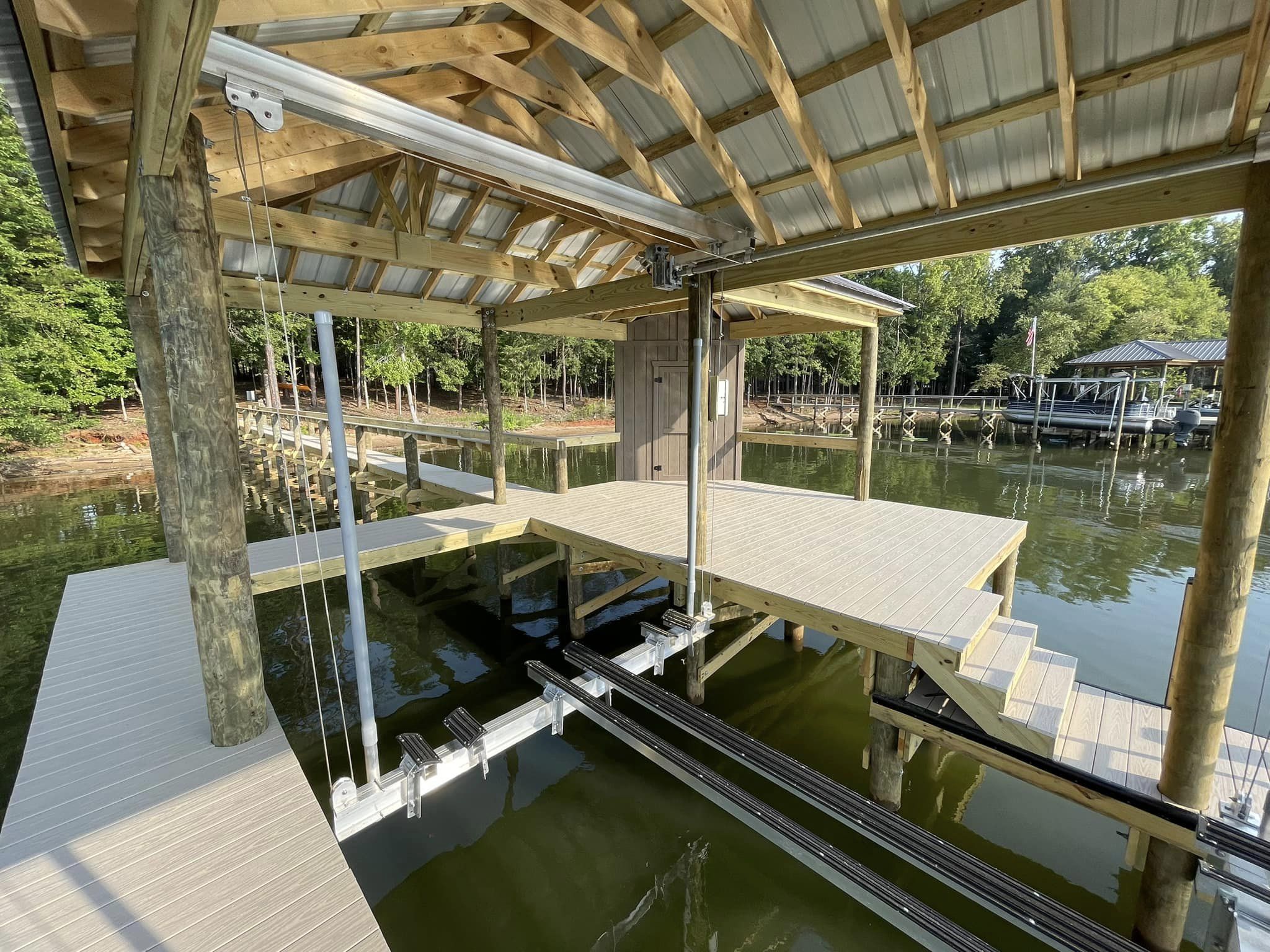
Boathouse lifts use an overhead drive system with cables routed through pulleys and cradle assemblies. This allows the boat to lift vertically within the boathouse while supporting stability and load distribution.
Scroll sideways to view all specifications.
| Capacity | Lift Configuration | Motor | Drive Unit | Cable | Cradle |
|---|---|---|---|---|---|
| 7,000 lb. | Single-motor gear drive Boathouse lift with aluminum bunks | 1 H.P. | 40/90 gearbox 300:1 gear ratio | 1/4 in. stainless steel cable 90 ft. cable listed for 7K Boathouse Lift | 7,000 lb. aluminum cradle kit Includes pulleys, bunks, brackets, guide poles, weights, and hardware |
| 7,000 lb. | Two-motor gear drive Boathouse lift with aluminum bunks | 1 H.P. | 40/90 gearbox 300:1 gear ratio | 5/16 in. stainless steel cable Bow and stern cables listed separately | Aluminum cradle kit 5,000 lb. cradle kit also used on the 7K two-motor Boathouse Lift |
| 10,000 lb. | Two-motor gear drive Boathouse lift with aluminum bunks | 1 H.P. | 40/90 gearbox 300:1 gear ratio | 5/16 in. stainless steel cable Bow and stern cables listed separately | 10,000 lb. dual-motor aluminum cradle kit Includes pulleys, bunks, brackets, guide poles, weights, and hardware |
Helpful context: Boathouse lifts are configured around an overhead gear-drive system, with pulleys, cables, and cradle assemblies working together to lift the boat vertically inside the structure.
Engineering note: The boat’s weight should be properly distributed across the cradle, and the boathouse structure should be evaluated for the selected lift configuration. A local Tide Tamer dealer can help confirm the right setup for the vessel and boathouse conditions.
RESOURCES
Boathouse Lifts Engineered Spec Sheet
Why Choose a Boat House Lift?
A boat house lift does more than raise your boat. It helps protect your investment over time.
Benefits include:
Keeps your boat out of the water when not in use
Helps reduce algae, barnacles, and marine growth
Limits long-term saltwater exposure below the waterline
Helps preserve hull appearance and finish
Supports better performance by keeping the bottom cleaner
Makes cleaning and maintenance easier
Keeps your boat protected inside the boathouse
Helps extend the life of your boat and related components
When your goal is protection as much as lifting, a boat house lift is the system to consider.
GALLERY
IS THIS THE RIGHT LIFT FOR YOU?
Boat house lifts are designed specifically for covered structures, so the right fit depends heavily on your setup.
A Boat House Lift May Be Right If You:
Store your boat inside a boathouse
Want to keep your boat out of the water when not in use
Want more complete protection than a covered structure alone provides
Are dealing with marine growth, hull staining, or long-term water exposure
Want easier cleaning and maintenance
Have a boathouse structure that can support an overhead lift system
Want your boat protected but still ready for regular use
Planning a New Boathouse?
Plan your boat lift before framing, beam placement, electrical service, and final dock construction are complete. Early coordination helps ensure the lift capacity, overhead structure, cable routing, vessel clearance, and future service access work together from the start.
A Boat House Lift May Not Be the Best Fit If You:
Do not have a covered structure
Your boathouse cannot support overhead mounting
You need a free-standing piling lift system
You need capacity beyond the available boathouse lift range
You want an open-access or beamless setup
Your dock layout is better suited to a four-piling, eight-piling, or yacht lift